Cracking the Code: The Factory Method Pattern Explained
Vishal Gangapuram
Welcome to the second blog in our Design Patterns series! In the first post, Cracking the Code: A Beginner’s Guide to Design Patterns, we explored the fundamental idea behind design patterns and why they’re invaluable for developers. Now, let’s dive deeper into the world of Creational Patterns, starting with one of the most well-known: the Factory Method Pattern.
Whether you’re a junior developer still honing your skills or a seasoned pro looking to refine your craft, understanding how to leverage design patterns like Factory Method can take your coding game to the next level. In this post, I’ll break down what the Factory Method is, why it’s useful, and how you can apply it to your own projects. We’ll even include a detailed code example to bring it all together.
What is the Factory Method?
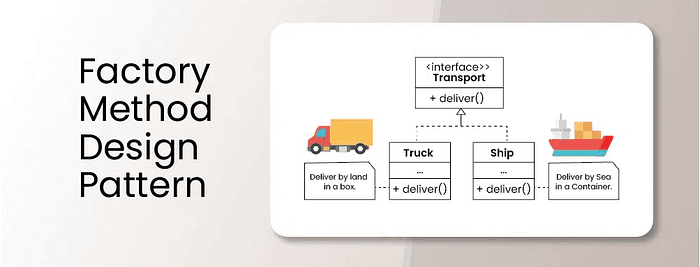
The Factory Method is a Creational Design Pattern that defines an interface for creating objects, but allows subclasses to alter the type of objects that will be created. It’s a powerful tool for scenarios where the exact type of object needed isn’t known until runtime.
Think of the Factory Method as a construction plan that tells your program, “Hey, here’s how you can build different objects!” But instead of specifying exactly which object to create, the Factory provides a way to create objects dynamically based on certain conditions.
Why Use the Factory Method?
Flexibility: Instead of hardcoding object instantiation throughout your codebase, you centralize it in a single place. This makes your code more flexible and easier to maintain.
Decoupling: It decouples the code that creates an object from the code that uses the object. This way, if you need to add a new class (e.g., another vehicle type), you don’t have to change the core business logic.
Scalability: Adding new types of objects becomes much easier. You can expand your system without affecting existing code — a fundamental principle of the Open/Closed Principle in SOLID design.
Factory Method in Action
Let’s say you’re building an application that manages different types of vehicles. At runtime, the app may need to create a Car, Bike, or even a Truck etc.. Using the Factory Method pattern, we can create these vehicle objects dynamically, without specifying exactly which one in the client code.
Here’s a breakdown of how the Factory Method works, followed by a code example in C#.
Breaking Down the Code Example
In this example, we’ll implement a VehicleFactory that generates different types of vehicles (Car, Bike), depending on the input.
Let’s Walk Through the Code:
Vehicle (Abstract Class):
This abstract class defines the interface for our product (in this case, a vehicle). Each vehicle type (Car, Bike) will inherit from this class and provide its own implementation of the Drive() method.
2. Concrete Products (Car, Bike):
These are the actual vehicle classes that inherit from Vehicle. Each class implements the Drive() method in its own way. For example, Car outputs “Driving a car!”, while Bike outputs “Riding a bike!”.
3. VehicleFactory (Factory Class):
This is where the Factory Method lives. The GetVehicle() method takes in a string (like “car” or “bike”) and returns the appropriate Vehicle object. This method handles the creation of the different vehicle types and abstracts it away from the client code.
4. Client Code (Main Method):
The client code calls VehicleFactory.GetVehicle() to create the appropriate vehicle object at runtime. Instead of worrying about the exact type of vehicle, the client only interacts with the Vehicle interface, calling the Drive() method.
How to Apply the Factory Method in Your Projects:
The Factory Method pattern can be applied in any situation where your program needs to create objects that share a common interface or superclass but are not determined until runtime.
Common Use Cases:
UI Toolkits: Creating different button or window styles depending on the platform (e.g., macOS vs. Windows).
Game Development: Dynamically spawning different types of game objects (e.g., enemies, power-ups).
Logging Systems: Creating different logging mechanisms depending on the environment (e.g., console vs. file).
How to Implement:
Identify an abstract base class or interface (like Vehicle).
Create subclasses that implement the abstract methods (like Car, Bike).
Use a Factory class to encapsulate the logic of which subclass to instantiate (like VehicleFactory).
Call the factory from your main code to create objects as needed.
Why the Factory Method Is Awesome:
By using the Factory Method pattern, you can:
Simplify Object Creation: You centralize the logic needed to create objects, making your code easier to maintain and extend.
Increase Flexibility: Adding new types of objects later on is a breeze. Simply create a new subclass and update the factory. The rest of your code remains untouched.
Promote Clean Code: Factory methods help reduce code duplication and make your logic more modular.
Wrapping Up
The Factory Method is an essential pattern to have in your design toolbox. It allows you to abstract away the specifics of object creation, making your code more scalable, maintainable, and flexible. Whether you’re working on a small project or scaling up to enterprise-level applications, the Factory Method can streamline your development process and keep your code clean.
In the next post, we’ll be diving deeper into the world of Creational Patterns, so stay tuned! As always, happy coding, and feel free to share your thoughts and experiences with design patterns in the comments below.
If you found this post helpful, don’t forget to check out our previous post Cracking the Code: A Beginner’s Guide to Design Patterns for more foundational insights!