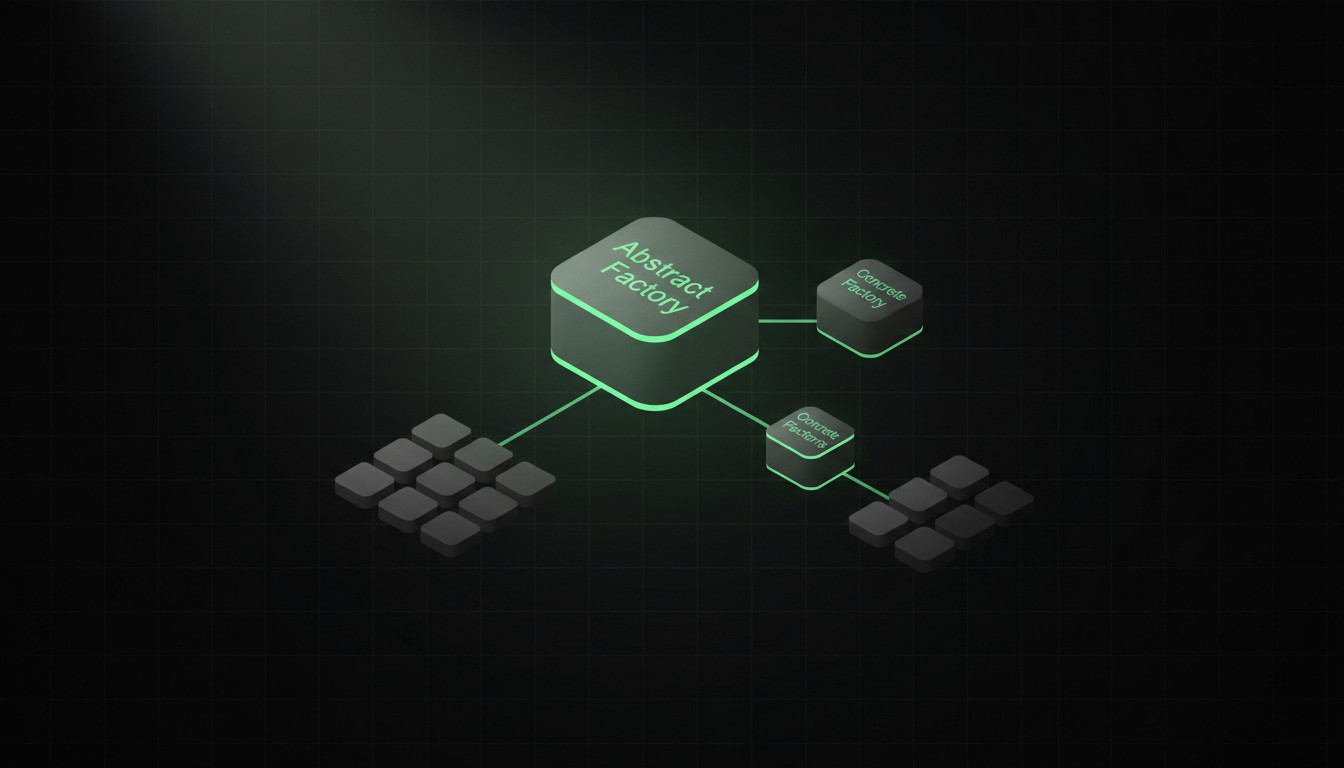
Welcome to the third installment of my design pattern blog series! So far, we’ve covered the basics of design patterns in my first post, “Cracking the Code: A Beginner’s Guide to Design Patterns”, and dived into the Factory Method pattern in the second post, “Cracking the Code: The Factory Method Pattern Explained”. Today, we’re going to explore one of the most important and powerful patterns in software development — the Abstract Factory pattern.
Whether you’re a beginner trying to wrap your head around design patterns or an experienced developer looking to refine your design skills, this blog will guide you through the Abstract Factory pattern with clear explanations and practical examples.
What is the Abstract Factory Pattern?
The Abstract Factory pattern is a creational design pattern that allows you to create families of related objects without specifying their exact classes. This is particularly useful when your system needs to be able to switch between different product families, and each family consists of a group of related objects that are meant to be used together.
In simpler terms, it’s like having a blueprint for a factory that can produce different products for different brands. Each brand has its own unique set of products, but from the consumer’s perspective (your application), you just need to ask the factory for the product, and it will handle the rest.
Understanding Through a Real-World Example
Let’s take a scenario that almost everyone can relate to — furniture! Imagine you’re designing a system for a furniture store. The store sells furniture in two different styles: Victorian and Modern. Each style includes several types of furniture, like chairs and tables.
You want your system to handle the creation of furniture for both styles but without repeating code or explicitly specifying which style of furniture to create every time. This is where the Abstract Factory pattern shines.
Key Components of the Abstract Factory
Abstract Factory: An interface that declares methods for creating abstract products (e.g., Chair, Table).
Concrete Factory: Implements the Abstract Factory methods to create specific products (e.g., VictorianFactory creates Victorian chairs and tables).
Abstract Product: An interface that declares common operations for the product (e.g., Chair, Table).
Concrete Product: Implements the Abstract Product interface (e.g., VictorianChair, ModernChair).
Client: Uses the abstract factory and abstract products but doesn’t know which concrete products it is using.
Applying the Abstract Factory Pattern
In the following example, we will create a furniture system using the Abstract Factory pattern. We’ll define factories that produce furniture in Victorian and Modern styles, along with two types of products: Chair and Table.
namespace AbstractFactory
{
public interface IChair
{
void SitOn();
}
}
namespace AbstractFactory
{
public interface ITable
{
void Use();
}
}
namespace AbstractFactory
{
public class VictorianChair : IChair
{
public void SitOn()
{
Console.WriteLine("Sitting on a Victorian Chair.");
}
}
}
namespace AbstractFactory
{
public class VictorianTable : ITable
{
public void Use()
{
Console.WriteLine("Using a Victorian Table.");
}
}
}
namespace AbstractFactory
{
public class ModernChair : IChair
{
public void SitOn()
{
Console.WriteLine("Sitting on a Modern Chair.");
}
}
}
namespace AbstractFactory
{
public class ModernTable : ITable
{
public void Use()
{
Console.WriteLine("Using a Modern Table.");
}
}
}
namespace AbstractFactory
{
public interface IFurnitureFactory
{
IChair CreateChair();
ITable CreateTable();
}
}
namespace AbstractFactory
{
public class VictorianFactory : IFurnitureFactory
{
public IChair CreateChair()
{
return new VictorianChair();
}
public ITable CreateTable()
{
return new VictorianTable();
}
}
}
namespace AbstractFactory
{
public class ModernFactory : IFurnitureFactory
{
public IChair CreateChair()
{
return new ModernChair();
}
public ITable CreateTable()
{
return new ModernTable();
}
}
}
namespace AbstractFactory
{
public class FurnitureStore
{
private readonly IChair _chair;
private readonly ITable _table;
public FurnitureStore(IFurnitureFactory factory)
{
_chair = factory.CreateChair();
_table = factory.CreateTable();
}
public void ShowFurniture()
{
_chair.SitOn();
_table.Use();
}
}
}
namespace AbstractFactory
{
public class Program
{
static void Main(string[] args)
{
Console.WriteLine("Victorian Furniture:");
IFurnitureFactory victorianFactory = new VictorianFactory();
FurnitureStore victorianStore = new FurnitureStore(victorianFactory);
victorianStore.ShowFurniture();
Console.WriteLine("\nModern Furniture:");
IFurnitureFactory modernFactory = new ModernFactory();
FurnitureStore modernStore = new FurnitureStore(modernFactory);
modernStore.ShowFurniture();
}
}
}namespace AbstractFactory
{
public interface IChair
{
void SitOn();
}
}
namespace AbstractFactory
{
public interface ITable
{
void Use();
}
}
namespace AbstractFactory
{
public class VictorianChair : IChair
{
public void SitOn()
{
Console.WriteLine("Sitting on a Victorian Chair.");
}
}
}
namespace AbstractFactory
{
public class VictorianTable : ITable
{
public void Use()
{
Console.WriteLine("Using a Victorian Table.");
}
}
}
namespace AbstractFactory
{
public class ModernChair : IChair
{
public void SitOn()
{
Console.WriteLine("Sitting on a Modern Chair.");
}
}
}
namespace AbstractFactory
{
public class ModernTable : ITable
{
public void Use()
{
Console.WriteLine("Using a Modern Table.");
}
}
}
namespace AbstractFactory
{
public interface IFurnitureFactory
{
IChair CreateChair();
ITable CreateTable();
}
}
namespace AbstractFactory
{
public class VictorianFactory : IFurnitureFactory
{
public IChair CreateChair()
{
return new VictorianChair();
}
public ITable CreateTable()
{
return new VictorianTable();
}
}
}
namespace AbstractFactory
{
public class ModernFactory : IFurnitureFactory
{
public IChair CreateChair()
{
return new ModernChair();
}
public ITable CreateTable()
{
return new ModernTable();
}
}
}
namespace AbstractFactory
{
public class FurnitureStore
{
private readonly IChair _chair;
private readonly ITable _table;
public FurnitureStore(IFurnitureFactory factory)
{
_chair = factory.CreateChair();
_table = factory.CreateTable();
}
public void ShowFurniture()
{
_chair.SitOn();
_table.Use();
}
}
}
namespace AbstractFactory
{
public class Program
{
static void Main(string[] args)
{
Console.WriteLine("Victorian Furniture:");
IFurnitureFactory victorianFactory = new VictorianFactory();
FurnitureStore victorianStore = new FurnitureStore(victorianFactory);
victorianStore.ShowFurniture();
Console.WriteLine("\nModern Furniture:");
IFurnitureFactory modernFactory = new ModernFactory();
FurnitureStore modernStore = new FurnitureStore(modernFactory);
modernStore.ShowFurniture();
}
}
}namespace AbstractFactory
{
public interface IChair
{
void SitOn();
}
}
namespace AbstractFactory
{
public interface ITable
{
void Use();
}
}
namespace AbstractFactory
{
public class VictorianChair : IChair
{
public void SitOn()
{
Console.WriteLine("Sitting on a Victorian Chair.");
}
}
}
namespace AbstractFactory
{
public class VictorianTable : ITable
{
public void Use()
{
Console.WriteLine("Using a Victorian Table.");
}
}
}
namespace AbstractFactory
{
public class ModernChair : IChair
{
public void SitOn()
{
Console.WriteLine("Sitting on a Modern Chair.");
}
}
}
namespace AbstractFactory
{
public class ModernTable : ITable
{
public void Use()
{
Console.WriteLine("Using a Modern Table.");
}
}
}
namespace AbstractFactory
{
public interface IFurnitureFactory
{
IChair CreateChair();
ITable CreateTable();
}
}
namespace AbstractFactory
{
public class VictorianFactory : IFurnitureFactory
{
public IChair CreateChair()
{
return new VictorianChair();
}
public ITable CreateTable()
{
return new VictorianTable();
}
}
}
namespace AbstractFactory
{
public class ModernFactory : IFurnitureFactory
{
public IChair CreateChair()
{
return new ModernChair();
}
public ITable CreateTable()
{
return new ModernTable();
}
}
}
namespace AbstractFactory
{
public class FurnitureStore
{
private readonly IChair _chair;
private readonly ITable _table;
public FurnitureStore(IFurnitureFactory factory)
{
_chair = factory.CreateChair();
_table = factory.CreateTable();
}
public void ShowFurniture()
{
_chair.SitOn();
_table.Use();
}
}
}
namespace AbstractFactory
{
public class Program
{
static void Main(string[] args)
{
Console.WriteLine("Victorian Furniture:");
IFurnitureFactory victorianFactory = new VictorianFactory();
FurnitureStore victorianStore = new FurnitureStore(victorianFactory);
victorianStore.ShowFurniture();
Console.WriteLine("\nModern Furniture:");
IFurnitureFactory modernFactory = new ModernFactory();
FurnitureStore modernStore = new FurnitureStore(modernFactory);
modernStore.ShowFurniture();
}
}
}namespace AbstractFactory
{
public interface IChair
{
void SitOn();
}
}
namespace AbstractFactory
{
public interface ITable
{
void Use();
}
}
namespace AbstractFactory
{
public class VictorianChair : IChair
{
public void SitOn()
{
Console.WriteLine("Sitting on a Victorian Chair.");
}
}
}
namespace AbstractFactory
{
public class VictorianTable : ITable
{
public void Use()
{
Console.WriteLine("Using a Victorian Table.");
}
}
}
namespace AbstractFactory
{
public class ModernChair : IChair
{
public void SitOn()
{
Console.WriteLine("Sitting on a Modern Chair.");
}
}
}
namespace AbstractFactory
{
public class ModernTable : ITable
{
public void Use()
{
Console.WriteLine("Using a Modern Table.");
}
}
}
namespace AbstractFactory
{
public interface IFurnitureFactory
{
IChair CreateChair();
ITable CreateTable();
}
}
namespace AbstractFactory
{
public class VictorianFactory : IFurnitureFactory
{
public IChair CreateChair()
{
return new VictorianChair();
}
public ITable CreateTable()
{
return new VictorianTable();
}
}
}
namespace AbstractFactory
{
public class ModernFactory : IFurnitureFactory
{
public IChair CreateChair()
{
return new ModernChair();
}
public ITable CreateTable()
{
return new ModernTable();
}
}
}
namespace AbstractFactory
{
public class FurnitureStore
{
private readonly IChair _chair;
private readonly ITable _table;
public FurnitureStore(IFurnitureFactory factory)
{
_chair = factory.CreateChair();
_table = factory.CreateTable();
}
public void ShowFurniture()
{
_chair.SitOn();
_table.Use();
}
}
}
namespace AbstractFactory
{
public class Program
{
static void Main(string[] args)
{
Console.WriteLine("Victorian Furniture:");
IFurnitureFactory victorianFactory = new VictorianFactory();
FurnitureStore victorianStore = new FurnitureStore(victorianFactory);
victorianStore.ShowFurniture();
Console.WriteLine("\nModern Furniture:");
IFurnitureFactory modernFactory = new ModernFactory();
FurnitureStore modernStore = new FurnitureStore(modernFactory);
modernStore.ShowFurniture();
}
}
}Breaking Down the Example
Abstract Products: IChair and ITable define the common behavior for different chairs and tables.
Concrete Products: VictorianChair, VictorianTable, ModernChair, and ModernTable implement the product interfaces for different furniture styles.
Abstract Factory: IFurnitureFactory provides a blueprint for creating chairs and tables.
Concrete Factories: VictorianFactory and ModernFactory implement the Abstract Factory interface to create Victorian and Modern furniture, respectively.
Client: The FurnitureStore class interacts with the abstract factory to produce furniture without needing to know the specific types being created.
Why Use the Abstract Factory Pattern?
You might wonder when you should use the Abstract Factory pattern in your projects. Let’s look at some practical use cases and the benefits it provides.
Use Cases
Cross-platform Applications: If you’re building an app that needs to work across multiple operating systems (e.g., Windows, MacOS, Linux), Abstract Factory can help by creating platform-specific components (e.g., buttons, dialogs) that share a common interface.
Theme-based Applications: For applications that support multiple themes (e.g., light and dark modes), Abstract Factory can be used to generate theme-specific components (e.g., backgrounds, text colors).
Database Access Layers: When working with different database management systems (e.g., SQL Server, MySQL, Oracle), Abstract Factory can provide the necessary abstractions to create database-specific connection objects.
Advantages
Flexibility: You can easily switch between different product families without changing your client code. For example, you can switch from Victorian to Modern furniture simply by changing the factory.
Consistency: Ensures that all products from a family (e.g., Modern or Victorian) are used together. This is particularly useful when maintaining a consistent look-and-feel across an application.
Scalability: Adding new product families (e.g., a new furniture style) is straightforward because you only need to create a new factory and product implementations.
Disadvantages
Complexity: The pattern adds a layer of complexity to your codebase. For simple systems, this might be overkill.
Tight Coupling to Abstract Factories: While clients are decoupled from concrete products, they become tightly coupled to abstract factories, which might limit flexibility in some cases.
Applying the Abstract Factory in Your Projects
If you’re working on projects where there are multiple product families, each with its own set of related components, the Abstract Factory pattern can make your code more maintainable and flexible.
Here are some tips on when and how to use the Abstract Factory pattern
Use it when you need to maintain consistency across a family of objects. For example, in a UI framework, you may need to ensure that all UI components (buttons, text fields) conform to a single look-and-feel.
Use it when you want to switch product families easily. For instance, if you’re developing a cross-platform application, the Abstract Factory pattern allows you to change the platform-specific code with minimal impact on your application logic.
Avoid using it when you have simple, unrelated products. For instance, if you only need to create a few simple objects that don’t belong to a family, the Factory Method pattern might be a better choice.
Conclusion
The Abstract Factory pattern is a powerful design tool for managing object creation in systems where you need to handle multiple product families. It helps decouple your code from concrete implementations, making your system more flexible and easier to maintain.
By applying this pattern, you can handle complex requirements like cross-platform applications, theme-based designs, and multiple database backends — all without worrying about the underlying implementation details.
Stay tuned for the next post in the series, where we’ll dive deeper into other creational patterns. Until then, happy coding!