
Techniques Every QA Should Know: Crafting Test Cases That Deliver Results!
Sai Charan
Test case design techniques are systematic methods that help testers identify test conditions, write test cases, and determine inputs for the tests. By employing these techniques, testers can ensure maximum coverage, reduce redundancy, and improve the overall quality of the application. Here are some test case design techniques :
1. Equivalence Partitioning (EP) :-
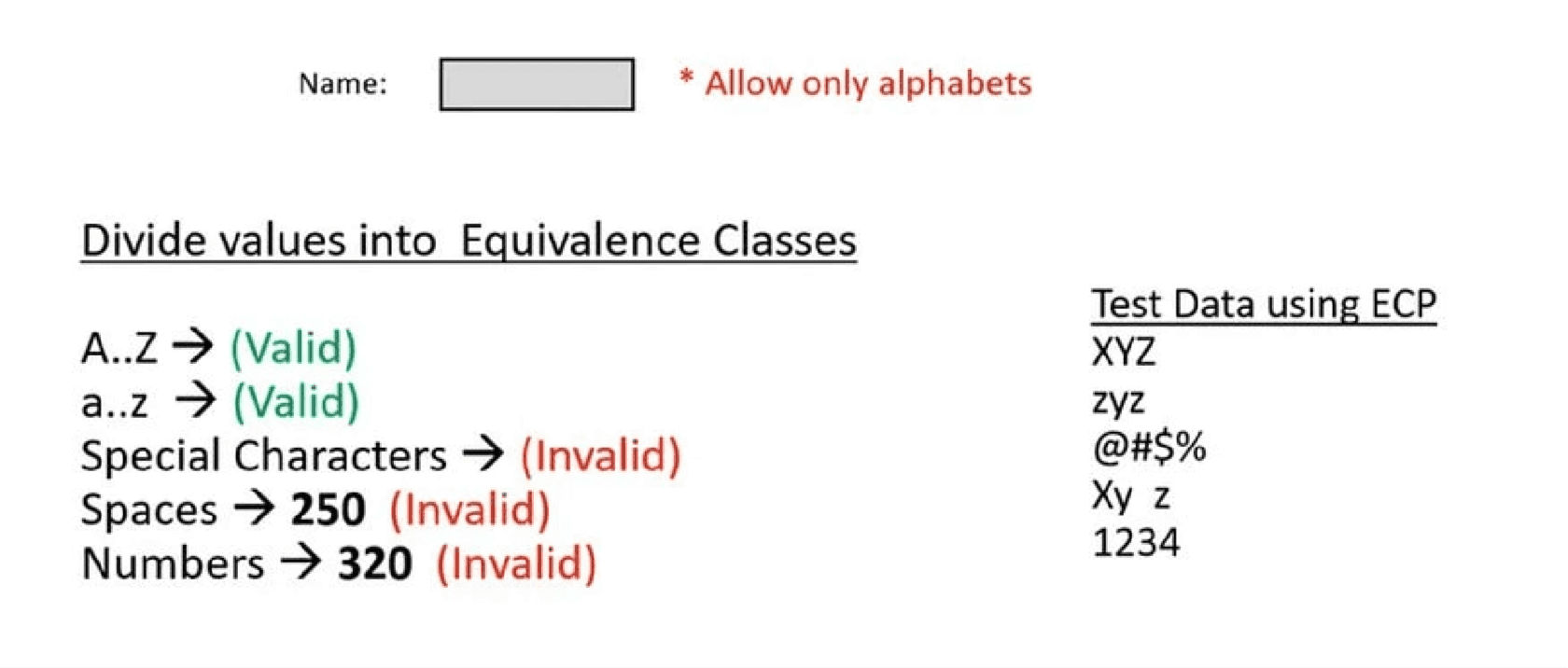
Equivalence Partitioning divides the input data into different partitions or groups. Testers select a representative value from each group to reduce the number of test cases while ensuring that every possible scenario is covered. It minimizes redundant test cases by testing just one value from each group, making the testing process more efficient.
How it works:
Valid Equivalence Class: Group of values that should work correctly.
Invalid Equivalence Class: Group of values that should fail or result in errors.
2. Boundary Value Analysis (BVA) :-
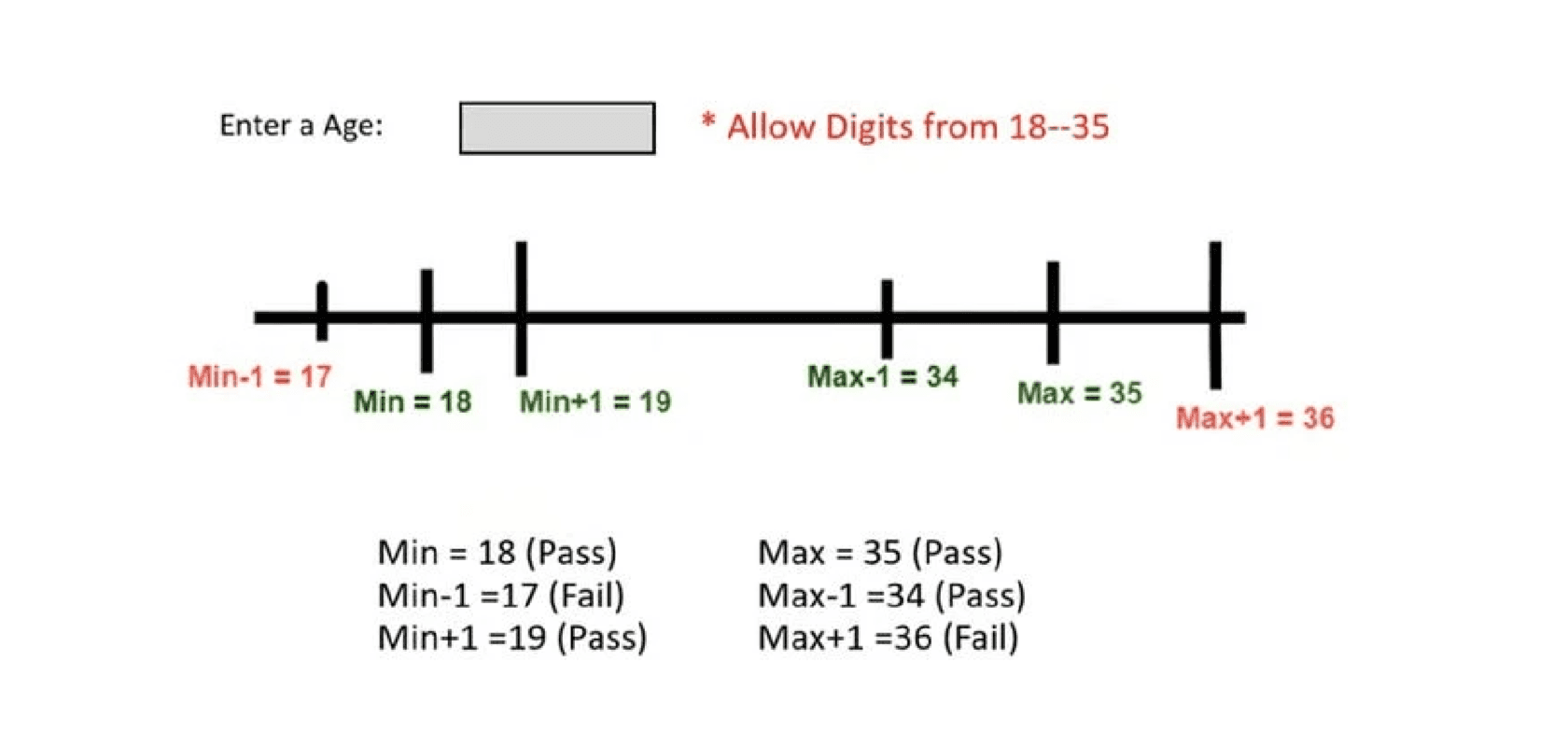
Boundary Value Analysis focuses on testing the values at the boundaries (or limits) of valid input ranges. Many errors occur at these boundaries, so testing them ensures that the system handles edge cases properly. It targets the critical points where the system is most likely to fail, ensuring that edge cases are tested effectively.
How it works:
You test the minimum and maximum values of a given range, as well as the values just inside and outside the boundary.
3. STATE TRANSATION TECHNIQUE :-
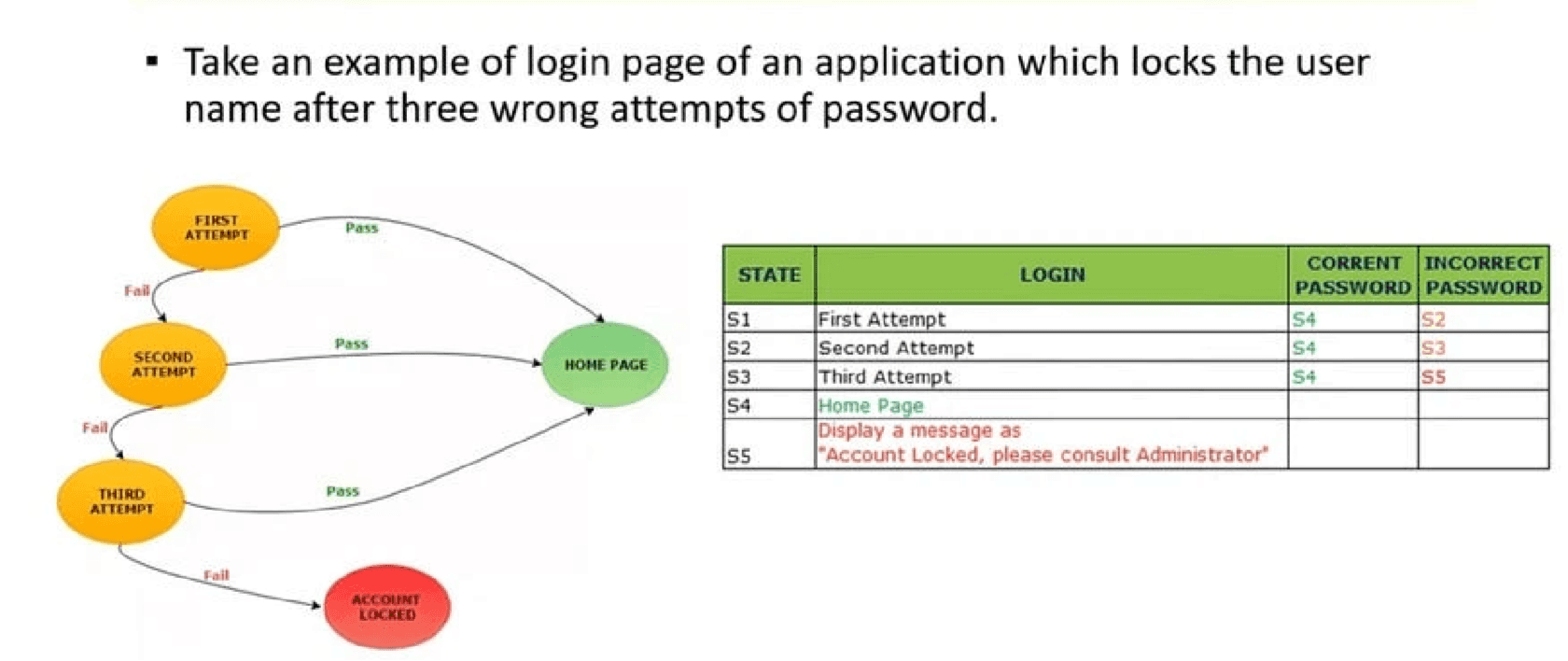
State Transition Testing is useful for applications where the system moves between different states based on user input or actions. This technique ensures that the system transitions between states correctly. It helps test systems that have multiple states or modes, such as login systems, order processing systems, and workflows.
How it works:
The system is modeled as a series of states, and test cases are designed to ensure the system moves from one state to another as expected based on inputs.
Press enter or click to view image in full size
4. Decision Table Testing :-
Decision Table Testing is ideal when the system’s behavior depends on multiple conditions. This technique helps in testing combinations of conditions and ensuring that all possible outcomes are considered. It ensures that all possible scenarios and interactions between conditions are tested, especially when there are complex business rules.
How it works:
A decision table is created that lists conditions (inputs) on one side and the corresponding actions or results on the other. Test cases are then designed for every combination of inputs.
5. Error Guessing :-
Error Guessing is an intuitive and experience-based technique used in test case design to identify potential areas where errors are most likely to occur. It is a powerful strategy that leverages the tester’s knowledge of the application, common error patterns, and typical user behaviors to predict where bugs might be found. This technique is widely used during exploratory testing but can also complement other structured test case design techniques.
In conclusion, test case design techniques are crucial for making sure software works correctly and meets users’ needs. By using different methods, like boundary value analysis, or state transition testing, decision table, error guessing techniques, testers can check whether the software behaves as expected and find potential issues. Each technique has its own purpose and is useful in different situations. When testers choose the right techniques and apply them properly, they can improve the quality of the software and ensure it works well for users. Overall, understanding and using these test case design techniques is key to delivering reliable and high-quality software.